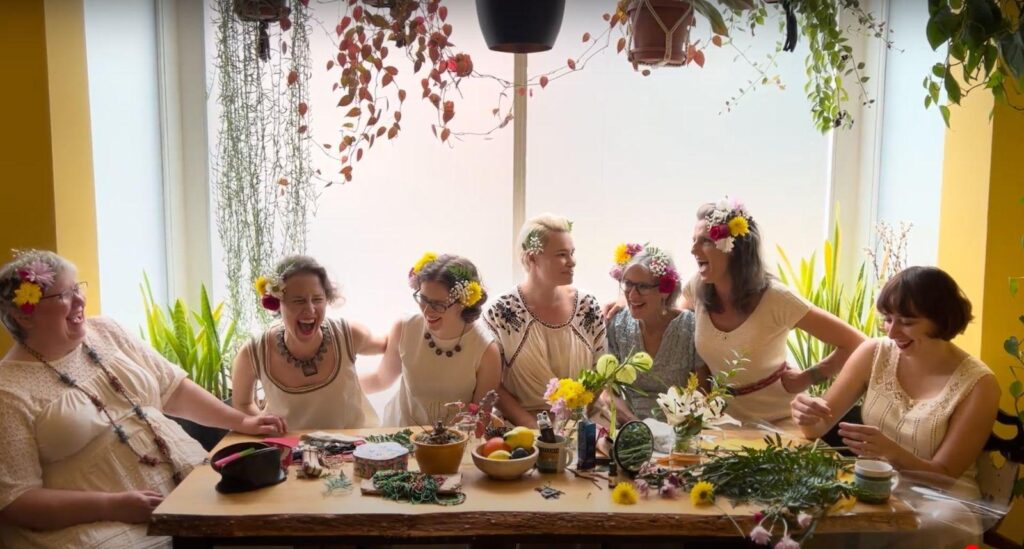
Vlada Tomova is a singer, composer, founder and leader of musical ensembles who also organizes international cultural exchange journeys. Co-created with Yasna Voice, New York Bulgarian Women’s Choir, Vlada makes her debut as a filmmaker with the documentary film “A Dragon Flew Over.”
Her musical path began in her native Bulgaria, becoming fully focused during her studies at Boston’s Berklee College of Music, where she explored jazz singing, composition, arranging, and music business.
Far from home and overseas for the first time, Vlada felt the call of her roots and began experimenting with blending Bulgarian folklore and contemporary music.
Her curiosity about music from different parts of the world awakened in Berklee’s distinctly international environment, along with her interest in the interconnectedness of cultures expressed through music, language, costumes, food, and customs. These themes continue to inspire her creative initiatives to this day.
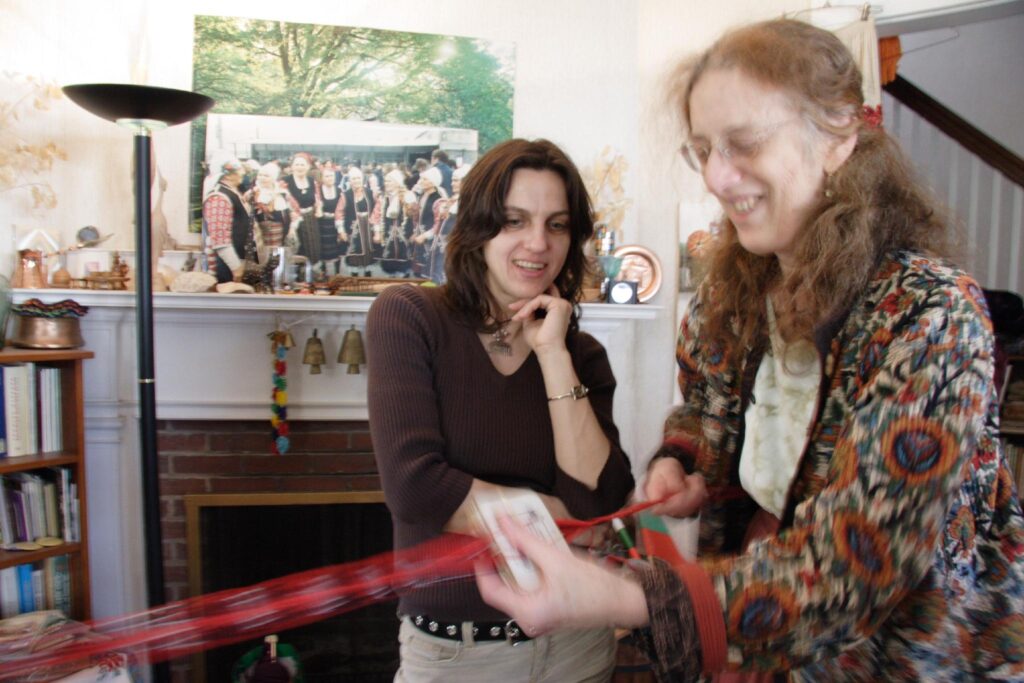
How the team behind “A Dragon Flew Over” came together could be described as a series of meaningful coincidences. Editor Alexander Petrov played a key role in the creation of the film. Originally from the town of Nedelino, famous for its unique two-part singing tradition, Alexander recalls meeting Martha Forsyth during her visits to the Rhodope town when he was still of preschool age.
Vlada and Alexander were connected by Veni Hadzhieva, half of the Hadzhievi Sisters duo. Veni and her sister Lydia are among the few contemporary performers of the Nedelino two-part singing style, and their talent was recognized at a young age by Forsyth. The Hadzhievi Sisters also actively assisted in gathering archival materials for the film.
Initially, the film began under the auspices of the Library of Congress. After Martha’s sudden passing and the expansion of the project, Melinda Hunt and Peter Forsyth joined as co-producers. Melinda had served as a host for Martha during the UNESCO-recognized Bistritsa Grannies’ US tour in 1990. Peter had accompanied his mother on her travels to Bulgaria since the age of three, and he can often be seen in the film alongside Martha and his father, Dick.
Dozens of people contributed to the making of the film—through singing, arrangements, advice, archival materials, stories, technical and consulting guidance, collegial ideas, and financial support. Without their contributions, this film would not have been possible.